
Last updated November 15, 2026
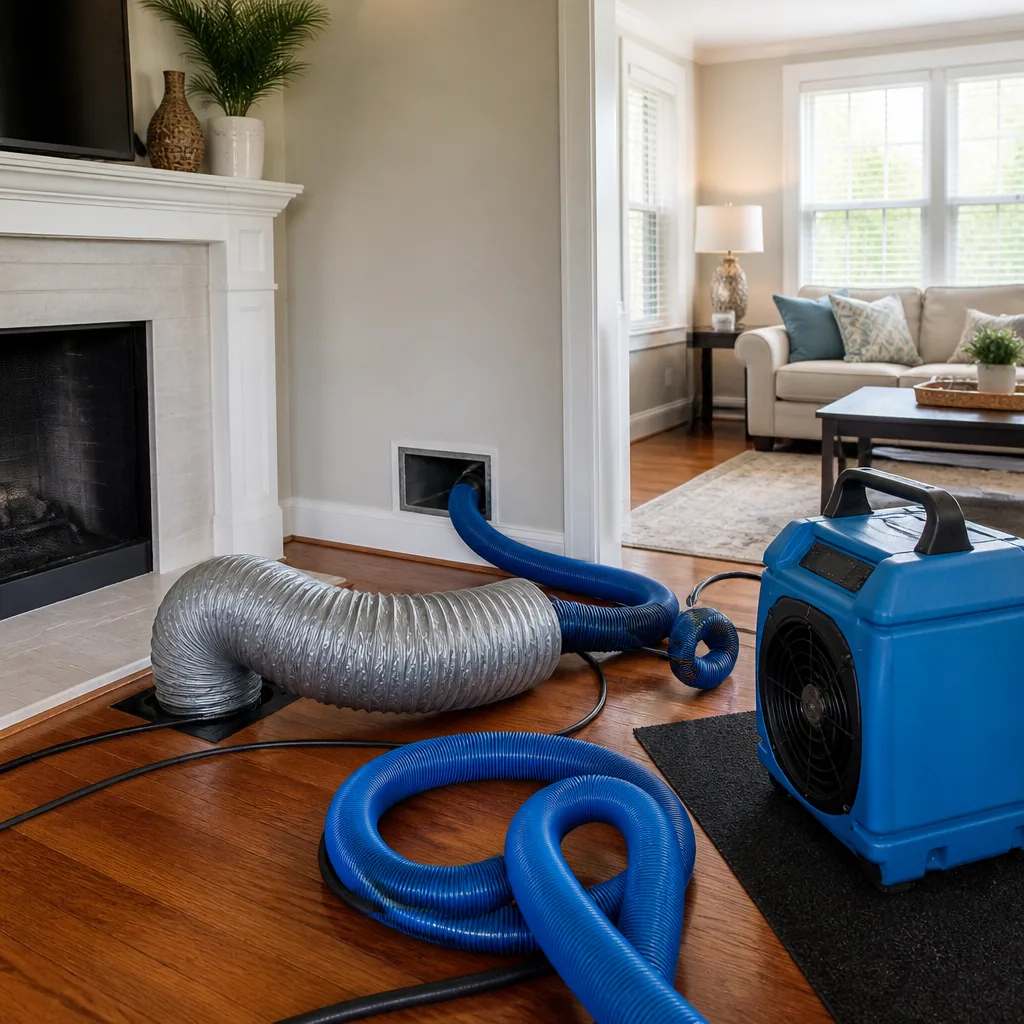 Whole-home duct cleaning
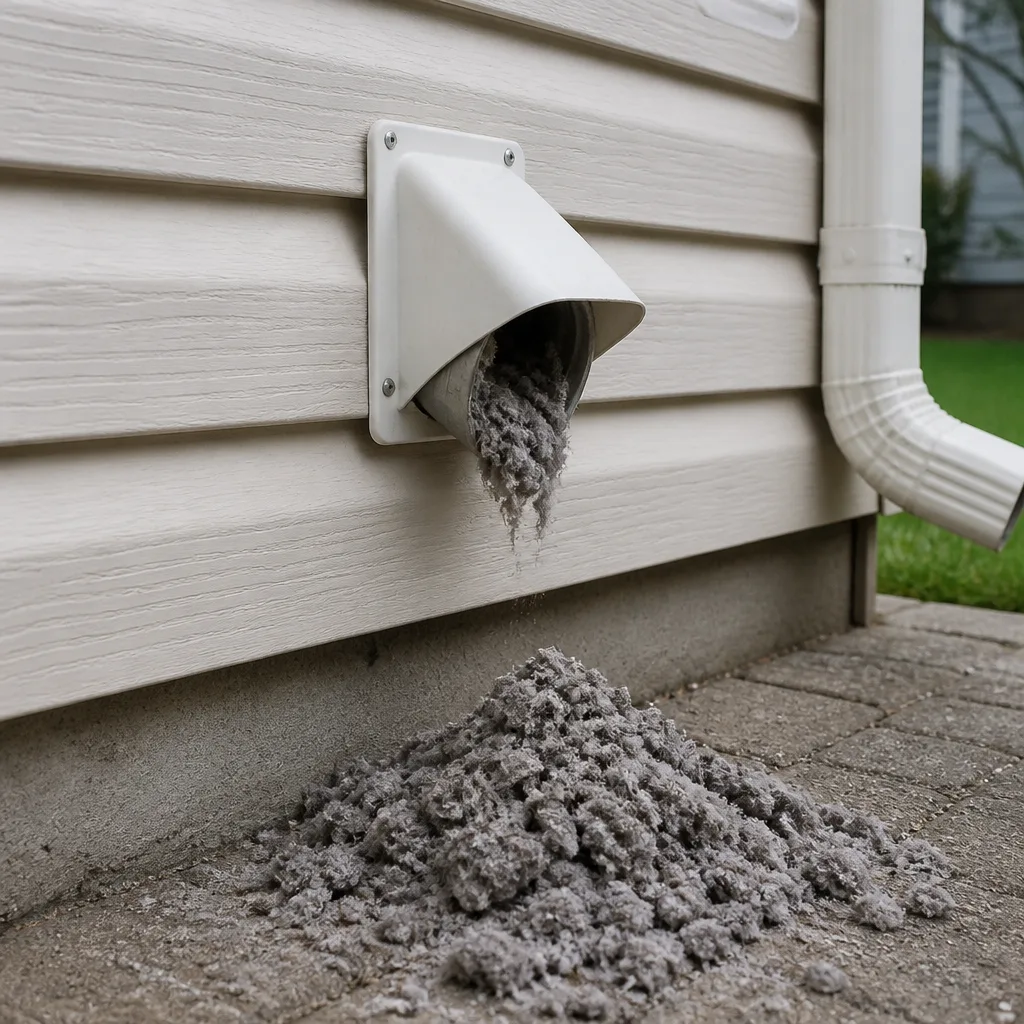 Dryer vent cleaning
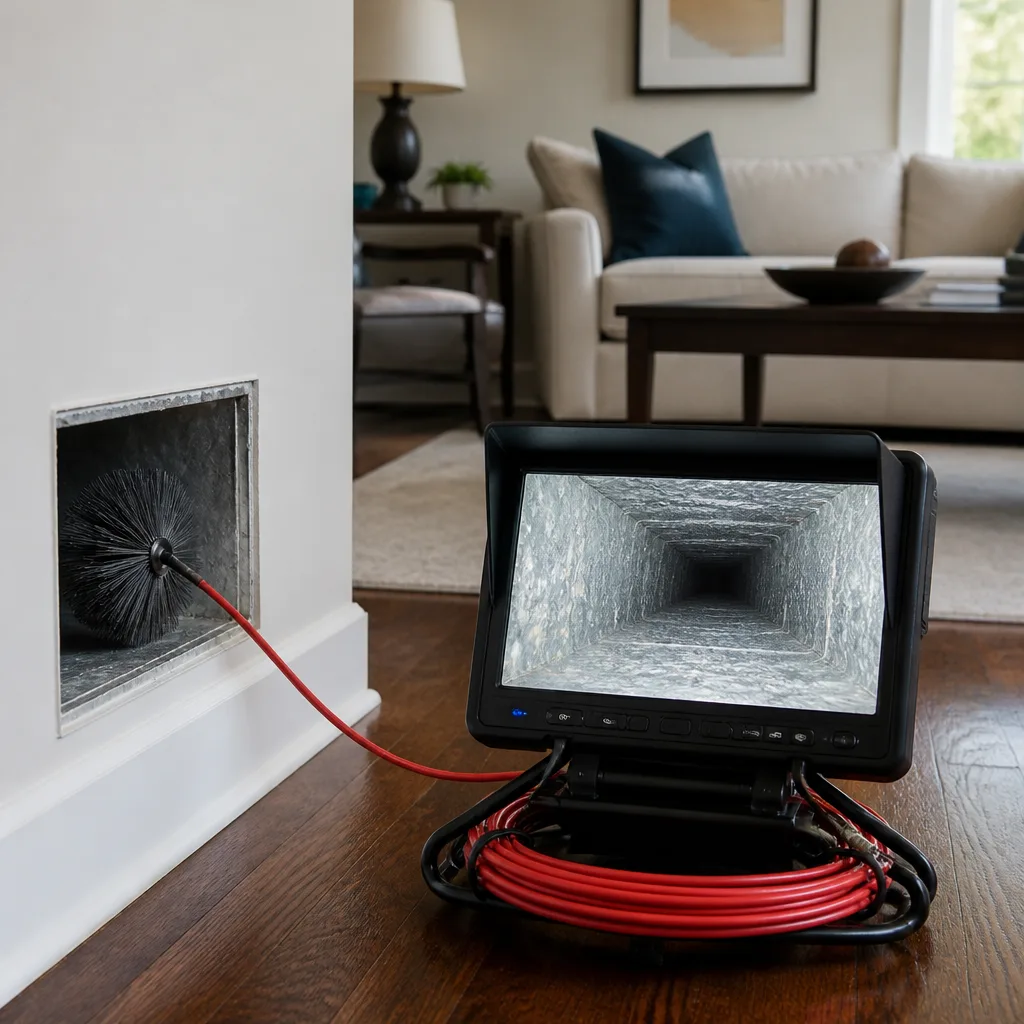 Camera inspection
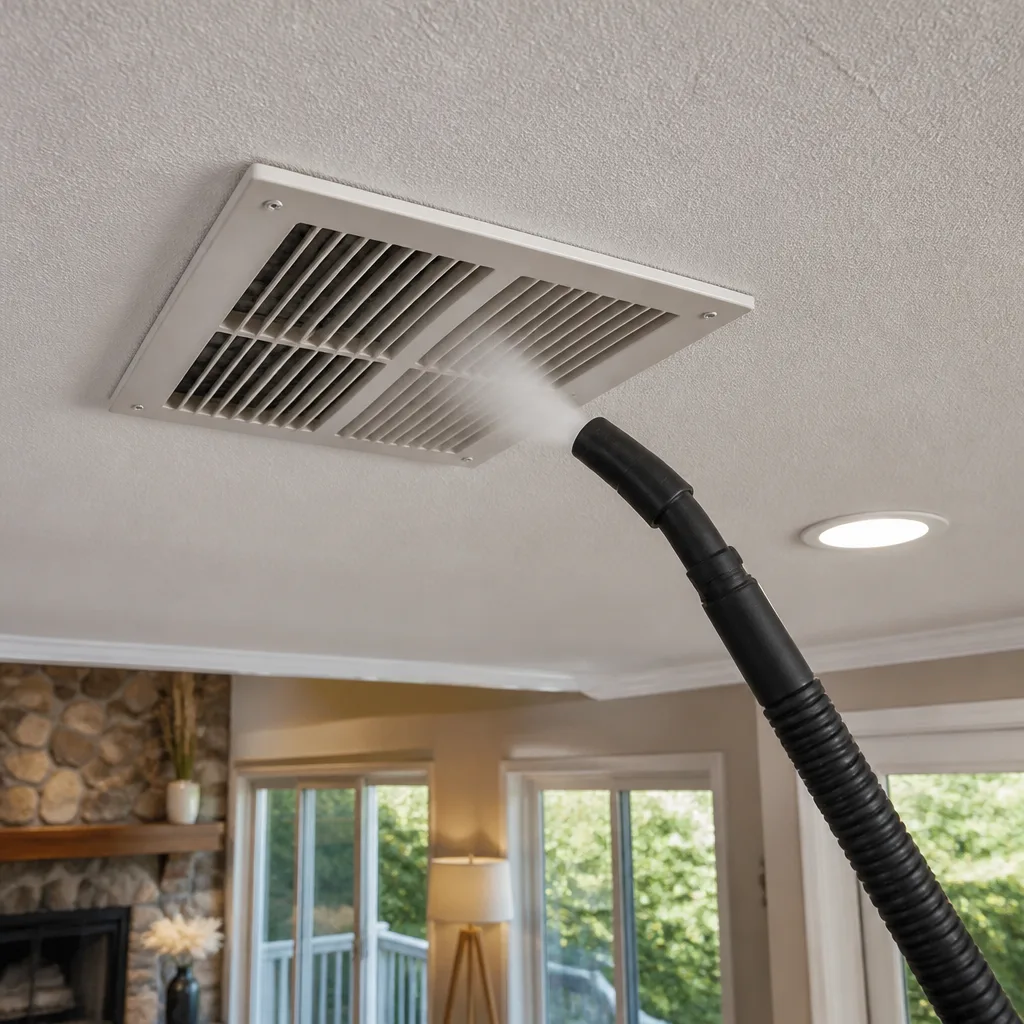 Sanitizing & deodorizing
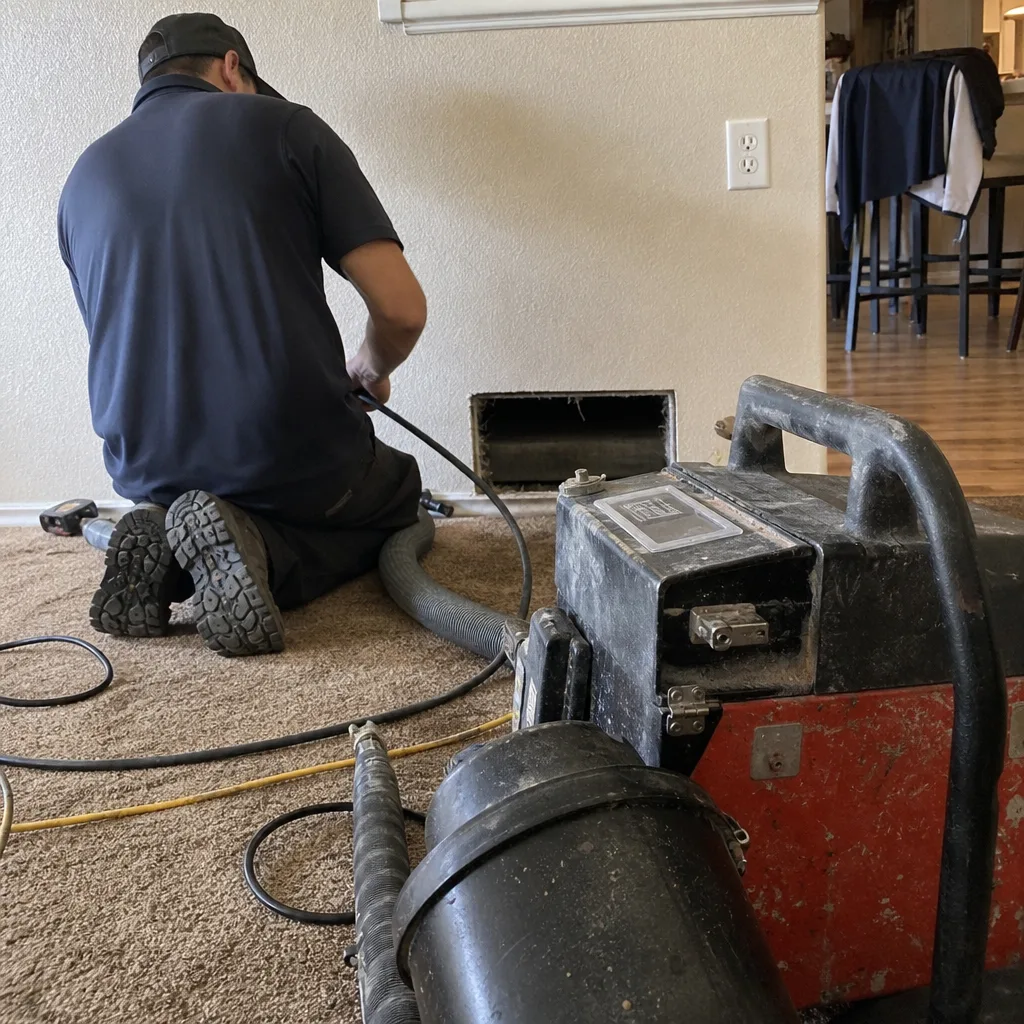
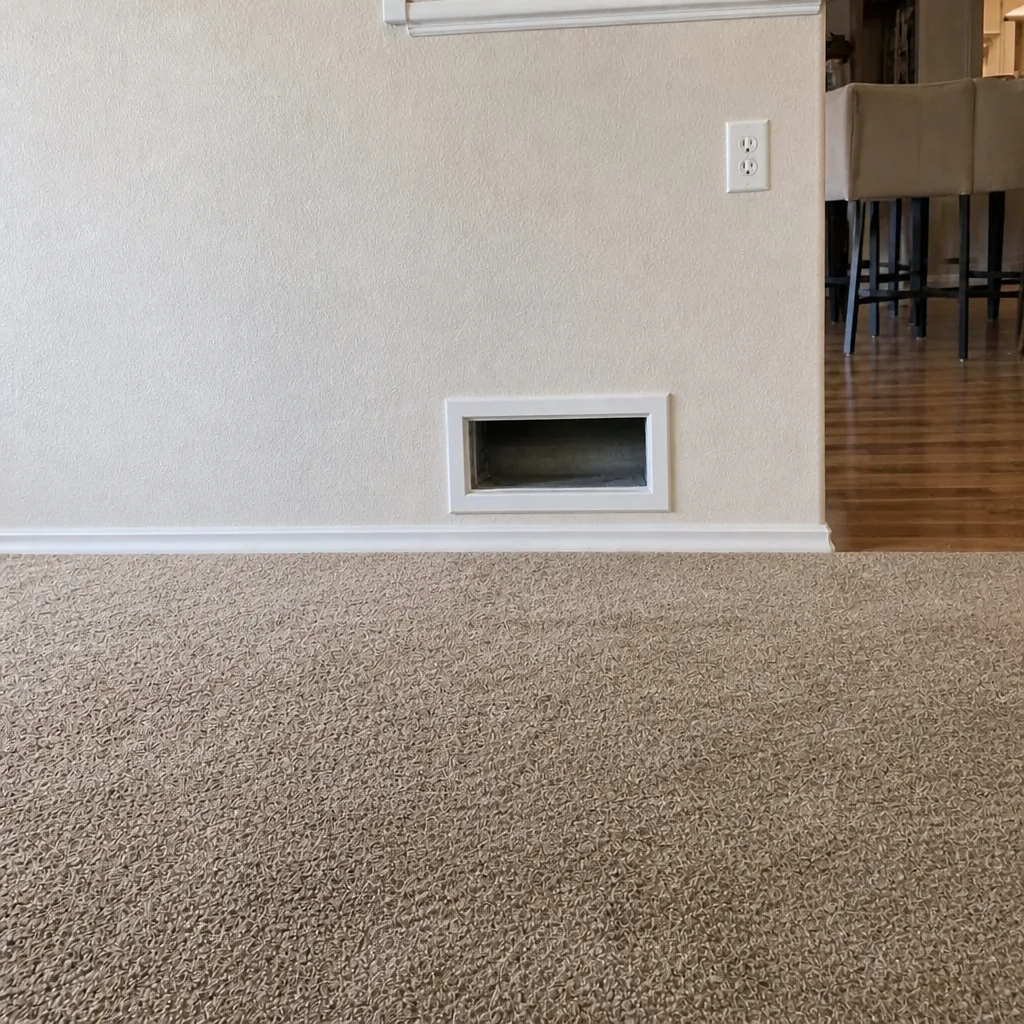
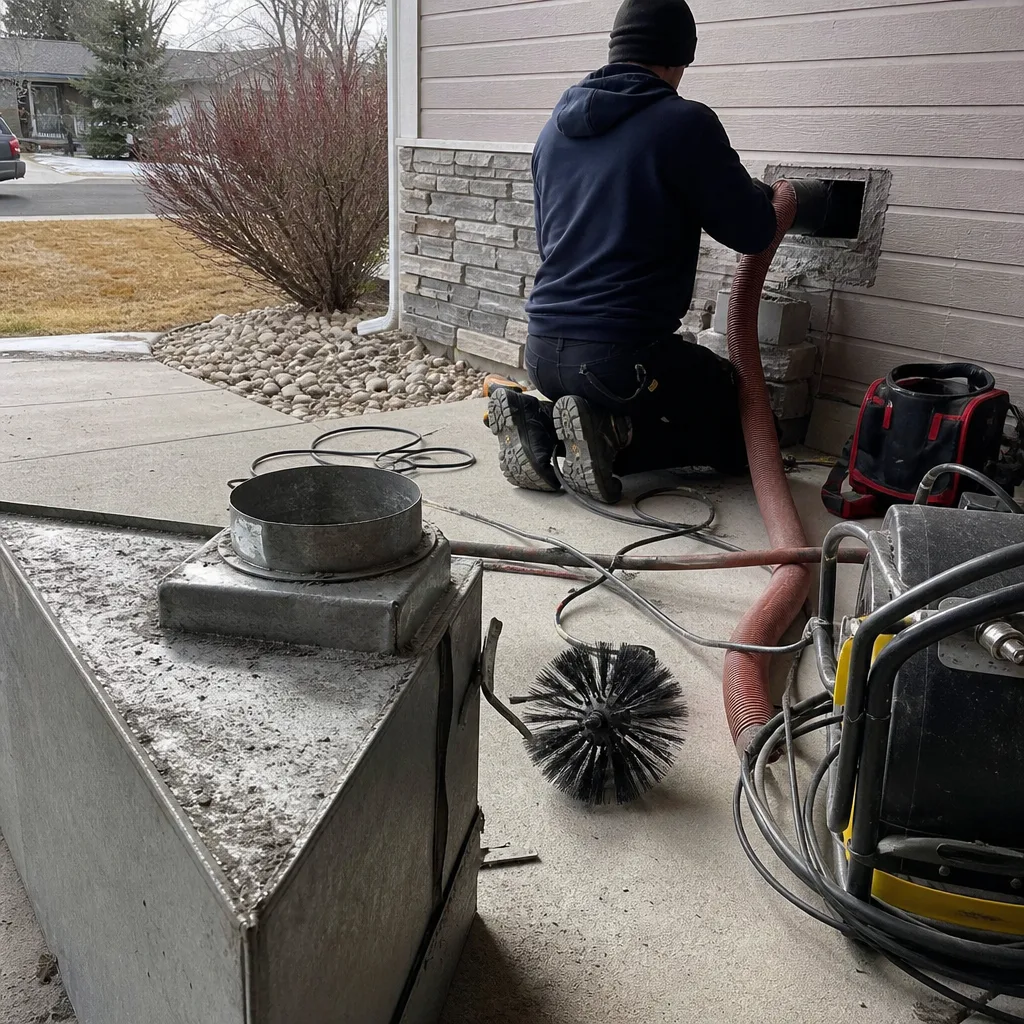
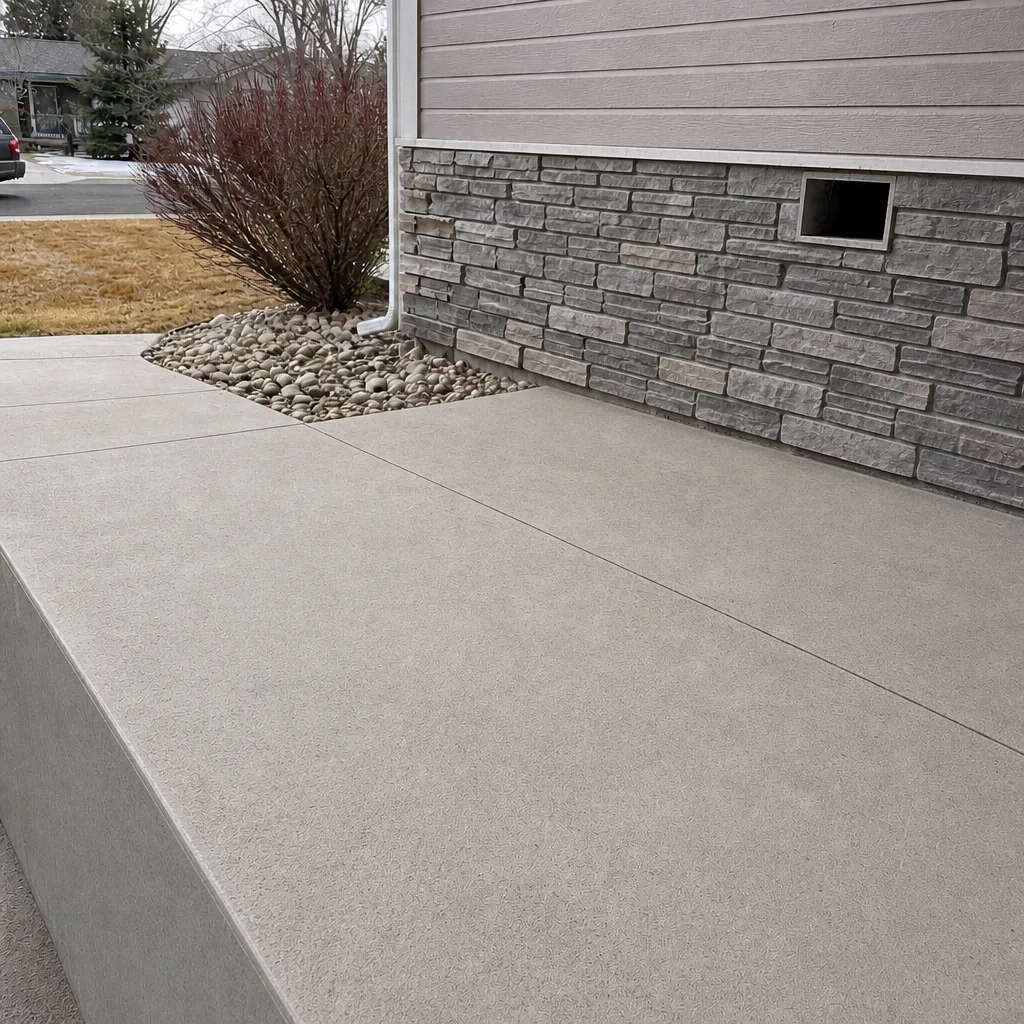
Whole-system duct and dryer vent check with before-and-after photos - you see exactly what came out of your vents
That "$99 whole-house special" is a bait ad - the real number appears once they are in your hallway, or the "clean" is a shop-vac at the register. We photograph the inside of your ducts before and after instead.
DIY vs Professional Air Duct Cleaning: The Fort Collins Homeowner’s Decision Guide
A homeowner with a shop-vac, a stiff brush, and a free afternoon can genuinely clean the visible parts of their duct registers. That’s real work, and it helps. What that setup cannot do is create the negative pressure needed to pull debris out of trunk lines and plenum boxes, which is where most of the contamination in a typical Fort Collins home actually sits. This guide maps the anatomy of a residential duct system zone by zone, shows you exactly what consumer tools can and cannot reach, and tells you which situations call for DIY and which ones get worse when you try. By the end you’ll know how to inspect your own system, what to photograph before you call anyone, and how to judge a quote.
Quick Answer
DIY air duct cleaning can handle surface debris at registers, filter boxes, and dryer vents, but it cannot extract contamination from trunk lines, branch runs, or plenum boxes because consumer vacuums don’t move enough air or hold enough negative pressure. Professional cleaning uses commercial-grade agitation and HEPA extraction to reach those zones. For most Fort Collins homes with visible dust, musty odors, or a recent renovation, the professional route is the one that actually removes what’s inside the system rather than the first six inches of it.
Styles & brands we work with
- Whole-home duct cleaning
- Dryer vent cleaning
- Camera inspection
- Sanitizing & deodorizing
Table of Contents
- The anatomy of a Fort Collins duct system: what’s reachable and what isn’t
- What consumer duct cleaning tools actually do
- When DIY duct cleaning is the right call
- When DIY makes the problem worse
- Why negative pressure is the whole ballgame
- How to do a DIY pre-inspection before you call a pro
- How to judge a duct cleaning quote in Fort Collins
- Cleaning versus repair: when the ductwork itself is the problem
The anatomy of a Fort Collins duct system: what’s reachable and what isn’t
To decide between DIY and professional cleaning, you need a mental map of where dust and debris actually collect. A standard forced-air system has four zones, and they behave very differently.
Register boots and grilles. These are the floor and ceiling vents you see. The boot is the sheet-metal fitting that connects the grille to the branch line. They’re shallow, open, and easy to reach with a brush and vacuum. Dust settles here visibly, which is why people assume cleaning them equals cleaning the system.
Branch lines. The smaller ducts that run from the trunk to each room. Typically four to eight inches across, often flexible or lined. A drill brush on a flexible rod can travel a few feet into a straight run. It cannot navigate elbows, transitions, or the crush points that flexible duct develops over time.
Trunk ducts. The large main runs, often rectangular and sheet metal, that distribute air through the house. In Fort Collins homes with basements or crawlspaces, these runs are long, and they collect a layer of fine dust that compacts against the bottom of the metal. Reaching it takes mechanical agitation along the full length plus simultaneous extraction.
Supply and return plenums. The boxes directly above the furnace and beside the air handler. This is the highest-deposit zone in most systems because airflow slows and drops particulate here. It’s also the zone almost no consumer tool can reach, because the access usually requires removing panels and working around the heat exchanger and blower.
Here’s the honest breakdown:
- DIY-accessible: register grilles, the first few inches of each boot, filter boxes, and the visible plenum surfaces you can reach with the panel off and power disconnected.
- Not DIY-accessible without specialty tools: full branch runs, elbows, and flexible duct interiors.
- Effectively professional-only: trunk duct interiors, plenum boxes, and any zone requiring sustained negative pressure to extract what agitation loosens.
If you want to understand the full professional process, the duct cleaning in Fort Collins page walks through how a complete system cleaning is sequenced from plenum to register.
What consumer duct cleaning tools actually do
This is where the marketing gets ahead of the physics. Consumer kits are sold as “complete duct cleaning systems,” and they do have a real function. It just isn’t the function most people are buying them for.
Drill brush kits
A drill brush kit is a stiff nylon or wire brush on a flexible shaft that you feed into a register. It agitates dust from duct walls effectively. What it doesn’t do is remove the dust. The brush loosens material that then settles a few feet downstream, or blows back into the room, because there’s no extraction running alongside it. It’s a broom with no dustpan.
Dryer vent rods
These are the best of the consumer tools, and we’ll say so plainly. A flexible rod with a brush head, run through a dryer vent from the outside, removes real lint. It’s a legitimate tool for a legitimate task, and for a short, straight dryer run it works. On a long run with elbows, or a vent that transitions through a wall cavity, it reaches only partway.
Shop vacuums with duct attachments
A strong shop-vac moves somewhere in the neighborhood of 150 to 250 cubic feet per minute at the hose, and that number falls sharply once you add a length of narrow duct hose and a restriction at the far end. Commercial extraction is a different order of magnitude, and more importantly it’s paired with containment. A shop-vac without HEPA filtration can actually aerosolize fine particulate back into the living space, which defeats the point.
The CFM reality
Extraction only works when the vacuum moves more air than the agitation disturbs. A brush that frees dust into a 200-CFM airstream will leave most of it in the duct. Professional equipment is sized so that agitation and extraction are balanced, and so that the extraction runs continuously while the brush works. That’s why we run Rotobrush brush-and-vacuum systems with Nikro HEPA extraction: the two halves of the job happen at the same time, in the same duct, with the debris captured rather than redistributed.
When DIY duct cleaning is the right call
There are real situations where picking up a vacuum and doing the work yourself is the correct decision. We’d rather tell you that than sell you a cleaning you don’t need.
Post-renovation register cleaning
Drywall dust is heavy and settles fast. After a basement finish or a kitchen remodel in a Fort Collins home, the registers and boots near the work area collect a visible layer of gypsum dust. Vacuuming the grilles and the first few inches of each boot, with the system fan off, removes the bulk of it before it gets pulled into the system. Change the filter afterward. That’s a job worth doing yourself the day the drywall sanding ends.
Dryer vent lint removal
This is the one DIY task we actively encourage, done regularly. Lint accumulates in the vent run and is a leading cause of residential fires. Pull the dryer out, disconnect the transition duct, clean the lint trap housing, and if your run is short and straight, rod it from the outside. If your run is long, has multiple elbows, or you can’t reach the exterior termination easily, that’s when to bring in dryer vent cleaning as its own dedicated service rather than treating it as an add-on.
Filter box clearing
The return filter box collects debris around the filter frame. Vacuuming that area, checking that the filter seats properly, and confirming the gasket isn’t torn is a five-minute job that pays off in airflow.
Light seasonal maintenance
Vacuuming register grilles once or twice a year, especially after the heating season, keeps visible dust down and lets you notice changes. If you see something new, like staining or a musty smell, that’s your cue to stop and call.
When DIY makes the problem worse
Some conditions turn DIY duct cleaning from ineffective into counterproductive. These are the situations where we’d tell you to put the brush down.
Suspected mold inside the ductwork
If you can see dark staining in a register boot, or you smell a persistent musty odor when the system runs, don’t agitate it. Brushing mold colonies without containment scatters spores through the system and into the living space. Containment is the entire reason we use Abatement Technologies equipment, which is built for remediation-grade air management. This is a professional call, and it’s one where the equipment matters more than the technique.
Post-flood or water-damage remediation
Water intrusion into a duct system leaves moisture in insulation, duct liner, and joints. Cleaning without drying and containment just moves the problem. If your Fort Collins home has had water in the crawlspace, basement, or mechanical closet, the ductwork needs assessment before anything gets brushed.
Systems with fiberglass duct liner
Interior duct liner is a fibrous acoustic and thermal lining common in older systems. Its surface is fragile. A drill brush run across it tears fibers loose, and a shop-vac can’t capture them. Agitation without proper extraction converts a lined duct into a source of airborne fiber. If you don’t know whether your ducts are lined, look into a register with a flashlight before you buy any brush kit.
Flexible duct with crushed or torn sections
Flex duct kinks and tears. Running a rod through a damaged section can open a tear further, sending conditioned air into a wall cavity. Repair has to come before cleaning.
Why negative pressure is the whole ballgame
Every source of contamination in a duct system has one thing in common: it’s held in place loosely, and it moves when air moves. The only reliable way to remove it is to put the entire system under controlled negative pressure while you disturb the surfaces, so that anything that comes loose goes into a filter instead of into a bedroom.
That’s the single biggest technical difference between the two approaches. A shop-vac creates negative pressure at the end of its hose. Professional extraction creates negative pressure across the whole system, with the return or supply sealed to a HEPA unit and the machine running continuously while agitation happens downstream. Our technicians have up to 12 years of experience, and the first thing any of them will tell you is that cleaning a system without whole-system negative pressure is mostly theater.
Practical implications for a Fort Collins homeowner:
- Whole-system negative pressure requires sealing at the air handler and a dedicated HEPA extraction unit, not a hose taped to a register.
- Agitation has to happen while extraction runs, not before it. Sequential steps leave debris behind.
- Containment matters in occupied homes. Abatement Technologies units exist because remediation work can’t afford to redistribute contaminants into living space.
- Before-and-after photos of your own system are the only honest proof of what was removed.
You can read more about how this works in practice on our air duct cleaning service page.
How to do a DIY pre-inspection before you call a pro
The best thing a homeowner can do before requesting a quote is gather information. A well-documented pre-inspection gets you a more accurate estimate and protects you from a contractor who quotes blind and upsells on site.
- Photograph every register. Open each grille and take a clear, well-lit photo looking into the boot. Note which rooms have visible dust, staining, or debris. This gives you a baseline to compare against after any work.
- Locate your air handler and photograph the plenum. With the system power off at the breaker, and only if you’re comfortable removing a service panel, take a photo of the plenum interior. If you’re not comfortable, skip this step and let the technician do it.
- Measure your branch and trunk ducts. A tape measure across the visible duct opening tells a contractor the system size class. Write it down per room.
- Record filter size and condition. Note the nominal dimensions printed on the filter frame and how long it’s been in service. Filter neglect is the most common cause of a dirty system.
- Document any odors or symptoms. Note when a musty or dusty smell appears (on startup, only in certain rooms, after rain). Timing tells a technician where to look.
- Note recent work. Renovation, roofing, water damage, pest activity. All of these predict what’s in the ducts.
- Sketch the layout. A rough floor plan marking register locations and the mechanical room saves time and helps you follow the estimate.
If your ducts are also damaged, kinked, or disconnected, that’s a separate scope from cleaning, and it’s worth asking about air duct repair specifically. Cleaning around a broken duct doesn’t fix the leak.
How to judge a duct cleaning quote in Fort Collins
Duct cleaning has a bait-and-switch reputation for good reason: teaser pricing that expands once the technician is on site. The way to avoid it is to ask the right questions before anyone arrives.
Ask for a flat price per system, not a per-vent price. Per-vent pricing rewards the contractor for finding more vents. A flat price for the whole system, agreed in writing before work starts, is the model that keeps the final invoice honest. We quote one flat price per system, agreed before work begins, so you know the number before anyone touches your ductwork.
Ask what equipment is used and whether you can look it up. A contractor who names their equipment is telling you they expect you to verify it. We name ours because we’re proud of them, and because a homeowner who searches “Rotobrush” or “Abatement Technologies” can see for themselves what the machines are built for.
Ask how you’ll know the work was done. The answer should be before-and-after photos of your own system, not stock images of someone else’s duct. Ask to see the photos before final payment.
Ask about negative pressure and containment. A vague answer here is a red flag. A technician who does the work should be able to explain how the system gets sealed and where the extracted material goes.
Ask whether they also handle indoor air quality components. Filter housings and humidifier pads from Honeywell and Aprilaire are common in Fort Collins homes, and if a contractor stocks and services them, you avoid a second appointment. We keep both on hand for that reason.
For a full picture of what a complete cleaning covers from a company that works in Fort Collins, read the service details before you compare quotes.
Cleaning versus repair: when the ductwork itself is the problem
A cleaning removes what’s inside the ducts. It doesn’t fix the ducts. Those are different jobs, and confusing them is one of the most expensive mistakes a homeowner can make.
Signs that your system needs repair rather than cleaning:
- Rooms that never get enough air while others are fine (a disconnected or crushed branch).
- Visible kinks, sags, or separated joints in flexible duct in the attic or crawlspace.
- Dust streaks at duct joints, which indicate air leaking into the cavity instead of the room.
- Rattling or whistling at startup, suggesting a loose fitting.
- Higher-than-expected energy bills with no other explanation.
If any of these are present, cleaning first wastes money because the leak remains. We offer air duct repair as a standalone service for exactly this reason: we can diagnose and fix compromised ductwork instead of cleaning around a problem. If a contractor only cleans and can’t repair, a broken duct stays broken.
Fort Collins winters mean the heating system runs hard for months, and a leaking duct in a crawlspace loses conditioned air into cold space all season. Repair usually pays back faster than cleaning does.
Common Mistakes to Avoid
- Buying a drill brush kit and expecting a system cleaning. It agitates dust without extracting it, so you redistribute what you meant to remove. Save the money and put it toward a flat-rate professional clean.
- Running a shop-vac without HEPA filtration. Fine particulate passes straight through standard filters and back into your living space. If you’re vacuuming near a register, use a HEPA-filtered machine.
- Skipping the filter change after cleaning. In a Fort Collins home, a fresh filter after any duct work is standard. A dirty filter immediately re-contaminates a clean system.
- Ignoring a musty smell before brushing. Odor often means moisture, and moisture means mold or damaged liner. Agitation spreads both. Get an assessment first.
- Accepting a per-vent quote without a written total. The final invoice should be a flat price agreed before work, not a count of vents discovered afterward.
- Forgetting the dryer vent entirely. It’s a separate system, it collects lint, and it’s a fire risk. Cleaning ducts without checking the dryer vent leaves a real hazard in place.
- Hiring a cleaner who can’t repair. If your ducts have crushed runs or disconnected joints, you need someone who can fix them, not just clean around them.
See the difference
 Before
 After
 Before
 After
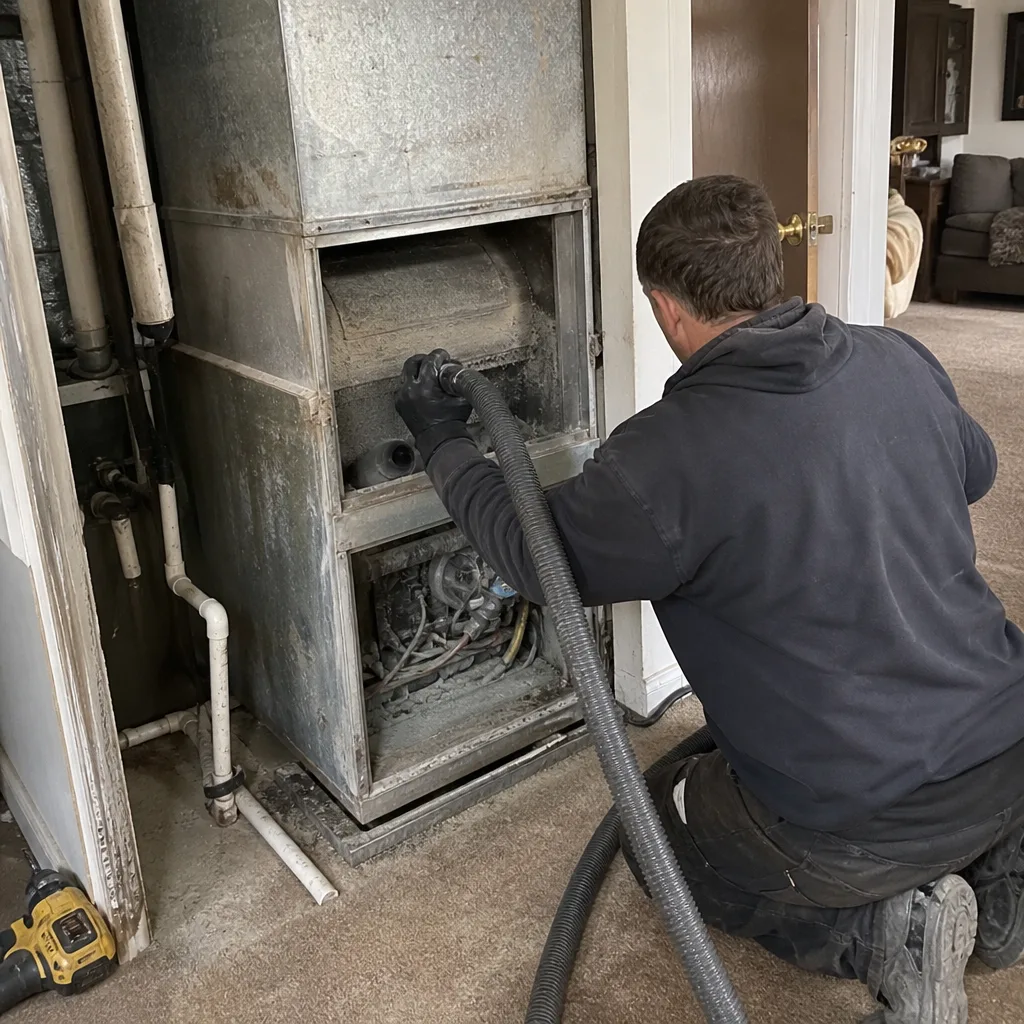 Before
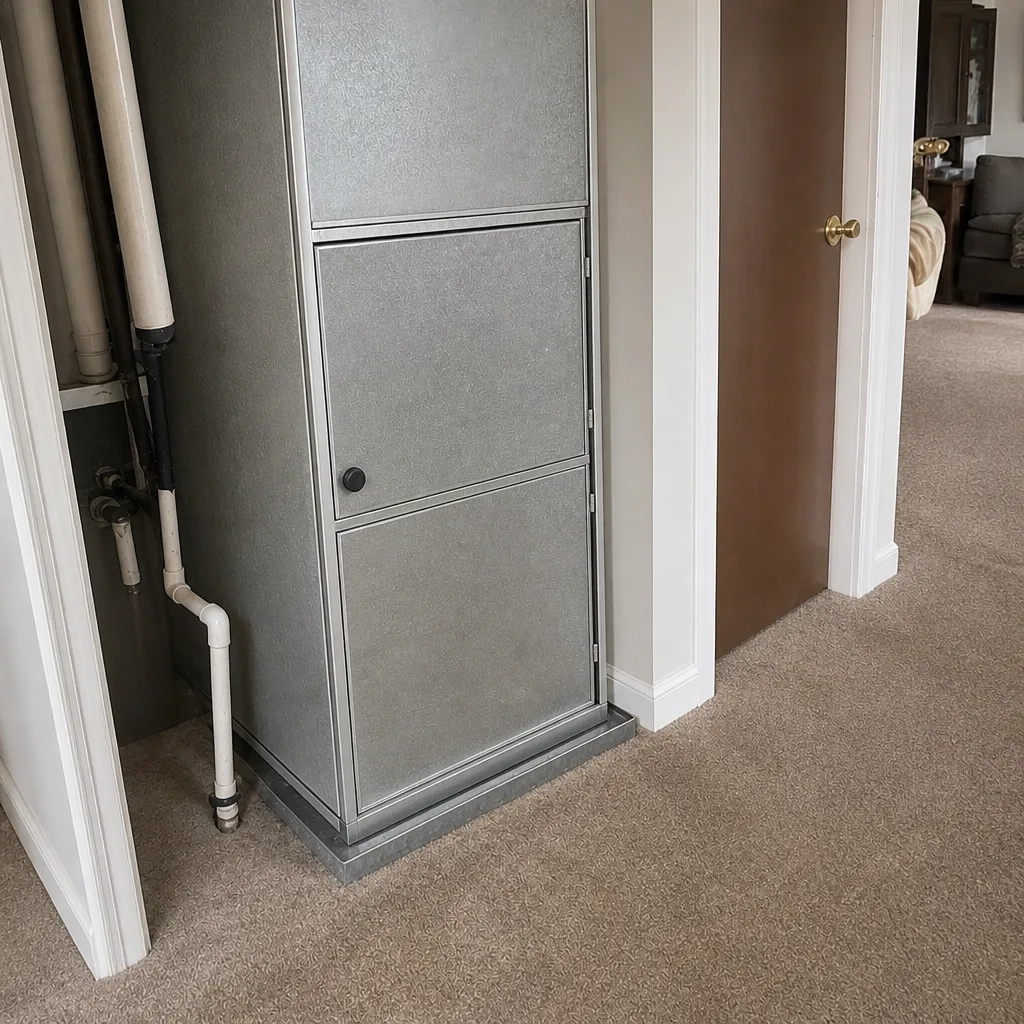 After
When to Call a Professional
Call a professional when you smell mustiness on startup, see staining inside a register boot, have had water damage or a significant renovation, or notice rooms that don’t heat evenly. Call when your dryer vent run is long or has elbows you can’t rod from outside. Call if your ducts are lined with fiberglass, since agitation without extraction makes those systems worse. And call if you simply want the entire system cleaned rather than the visible parts of it, because that requires negative pressure and containment equipment a homeowner doesn’t own. Duct Cleaning Fort Collins offers free estimates in Fort Collins. Call (844) 834-5984. We answer 24/7. Fast dispatch from 7am to 7pm, Sunday through Friday.
Frequently Asked Questions
You can clean register grilles, filter boxes, and the first few inches of each boot with a shop-vac, and that’s worth doing. What a shop-vac can’t do is pull debris from trunk lines and plenum boxes, because it doesn’t generate enough sustained negative pressure across the system, and without HEPA filtration it can put fine dust back into the air. Call (844) 834-5984 for a free estimate on a full system cleaning.
Pricing depends on system size, accessible run length, and condition, so it belongs in a written estimate rather than a number from a coupon. The reliable way to get an honest price is to ask for one flat price per system agreed before work begins, with before-and-after photos of your own ducts as proof of the work. Call (844) 834-5984 for an exact quote; estimates are free.
Low quotes usually buy a short visit with a shop-vac and no extraction equipment, covering registers and little else. A legitimate whole-system clean takes more time, more equipment, and containment to keep the debris out of your living space. Ask any contractor what machines they’ll run and whether they seal the system; the answer explains the price difference. Call (844) 834-5984 for a free, straight quote.
Ask for before-and-after photos of your own system, taken at the same registers, and look at them before you pay. Photos of your ducts are verifiable; a verbal assurance isn’t. With a flat price agreed up front and photos at the end, you have both a fixed cost and evidence. Call (844) 834-5984 to schedule an estimate.
Most homes don’t need it on a fixed schedule; condition decides, not the calendar. Visible dust at registers, a musty smell on startup, recent renovation or water damage, or a persistently dirty filter are the signals. Homes in Fort Collins with pets or heavy winter heating cycles tend to need attention sooner. Call (844) 834-5984 and we’ll tell you honestly whether it’s time.
Yes, for a short, straight run, and we encourage homeowners to do it regularly because lint is a genuine fire risk. It stops being safe or effective when the run is long, has multiple elbows, or terminates somewhere hard to reach; at that point a dedicated dryer vent cleaning gets the full length. Call (844) 834-5984 if you want the whole run cleared.
The Bottom Line
The DIY versus professional framing misses the point. The real question is whether a method reaches the dust and pulls it out, or simply stirs it up. DIY handles registers, filter boxes, and short dryer vents well, and we’d tell you to do those yourself. Trunk lines, plenum boxes, lined or damaged ductwork, and anything involving moisture need negative pressure, containment, and extraction equipment. Named tools you can verify, before-and-after photos, one flat price per system agreed before work, and a repair capability when the ductwork itself is broken. That’s the standard worth asking any contractor to meet in Fort Collins, including us.
If you’d like an honest read on your system, call Duct Cleaning Fort Collins at (844) 834-5984 for a free estimate. We answer 24/7, and we’ll tell you whether you need a cleaning, a repair, or nothing at all.
Written by the team at Duct Cleaning Fort Collins.